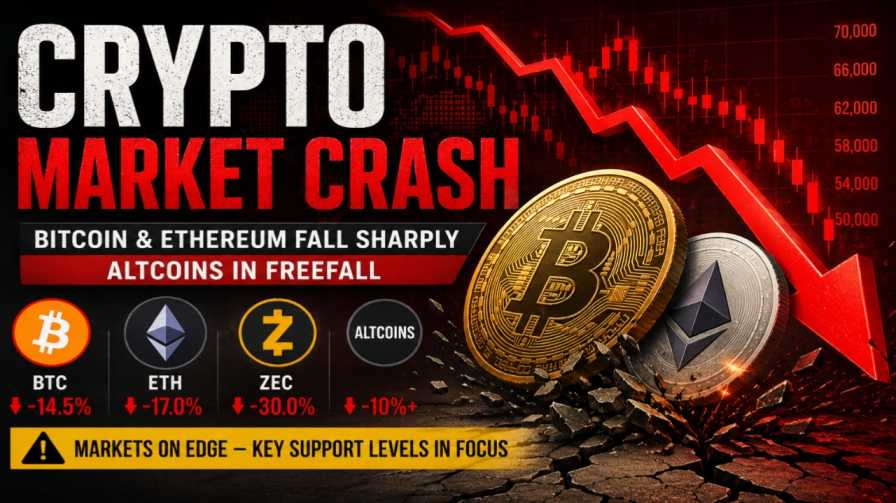
Crypto Market Crash 2026 shakes investor confidence as Bitcoin drops below $62K, Ethereum loses 18%, and altcoins tumble. Here’s why the crypto market is falling and what investors should watch next.
Crypto Market Crash 2026 Triggers Massive Sell-Off Across Digital Assets
The cryptocurrency market witnessed one of its biggest corrections of 2026 during the first week of June, wiping out billions of dollars from the digital asset ecosystem. Bitcoin plunged close to the $61,000 level, Ethereum suffered a steep weekly decline of nearly 18%, and several leading altcoins recorded double-digit losses.
The sudden downturn has sparked concerns among investors, with market sentiment shifting sharply toward fear. However, industry experts believe this correction may not signal the end of the bull cycle but rather a temporary reset driven by macroeconomic and regulatory factors.
Bitcoin and Ethereum Lead the Market Decline
Bitcoin, the world’s largest cryptocurrency, slipped from the $72,000 range to around $61,000 within days. Meanwhile, Ethereum experienced one of its worst weekly performances in recent years, losing nearly one-fifth of its value.
Other major cryptocurrencies such as XRP, Solana, and Cardano also faced heavy selling pressure as traders rushed to reduce risk exposure amid growing uncertainty.
The sharp decline pushed the total crypto market capitalization down to approximately $2.13 trillion, representing a significant loss in overall market value.
What Caused the Crypto Market Crash 2026?
Several major factors combined to trigger the latest crypto market correction:
1. Geopolitical Tensions Increase Investor Anxiety
Rising geopolitical conflicts and global economic uncertainties have forced investors to move away from high-risk assets. Cryptocurrencies, often considered volatile investments, were among the first sectors affected by the shift in market sentiment.
2. Bitcoin ETF Outflows Continue
Spot Bitcoin ETFs experienced a prolonged period of net outflows, signaling reduced institutional demand. As billions of dollars exited these investment products, selling pressure intensified across the broader crypto market.
3. Federal Reserve Policy Concerns
Investors are closely watching upcoming decisions from the U.S. Federal Reserve. Expectations regarding interest rates and monetary policy continue to influence risk assets, including cryptocurrencies.
4. Leveraged Traders Face Massive Liquidations
As prices dropped rapidly, leveraged positions were liquidated across major exchanges. More than a billion dollars worth of positions were reportedly wiped out in a short period, accelerating the market decline.
Capital Rotation: Money Isn’t Leaving Crypto Completely
Despite the market-wide sell-off, analysts suggest that institutional money is not entirely leaving the crypto industry.
Instead, investors appear to be reallocating funds toward emerging sectors such as:
- Stablecoins
- Real-world asset tokenization
- Blockchain infrastructure projects
- Corporate crypto treasury strategies
- Web3 development platforms
This trend indicates that long-term confidence in blockchain technology remains strong even during periods of market volatility.
Crypto Becomes More Connected to Global Markets
One noticeable trend during the Crypto Market Crash 2026 is the increasing relationship between cryptocurrencies and traditional financial markets.
Bitcoin and other digital assets are now reacting more strongly to:
- Economic data releases
- Inflation reports
- Interest rate expectations
- Stock market performance
- Global political developments
As institutional participation grows, crypto markets are behaving more like mainstream financial assets rather than independent speculative instruments.
Four Key Events That Could Shape the Next Crypto Rally
Regulatory Clarity in the United States
A major crypto regulatory bill, known as the CLARITY Act, is gaining attention among lawmakers. If approved, the legislation could provide long-awaited guidelines for digital assets and encourage greater institutional participation.
Bitcoin ETF Flow Recovery
A return to positive ETF inflows would indicate renewed confidence from large investors and could support a broader market recovery.
Blockchain Ecosystem Growth
Network activity across major blockchain platforms, particularly Solana and Ethereum, remains healthy despite falling token prices. Continued development could strengthen long-term market fundamentals.
Federal Reserve Decisions
Future comments from Federal Reserve officials regarding interest rates and liquidity conditions will likely influence the direction of both traditional and crypto markets throughout the summer.
Should Investors Panic?
Market corrections are a normal part of every crypto cycle. While short-term volatility can be uncomfortable, many analysts believe that the current downturn represents a healthy reset rather than a collapse of the digital asset industry.
Key long-term indicators such as blockchain adoption, institutional investment, real-world utility, and regulatory progress continue to show positive momentum.
Investors are advised to focus on risk management, conduct thorough research, and avoid making emotional decisions during periods of extreme market volatility.
Crypto Market Crash 2026
The Crypto Market Crash 2026 has undoubtedly created uncertainty across the digital asset landscape. Bitcoin’s sharp decline, Ethereum’s significant losses, and widespread fear among investors have dominated headlines. However, underlying industry fundamentals remain intact, and many experts view this correction as a temporary adjustment rather than a long-term bearish trend.